No products in the cart.
Blogs
How Many Pies Do You Need for 20, 50, or 100 Guests?

14
Oct
Oct
Planning dessert for a crowd can feel like a guessing game. You want everyone to get a slice, but you also do not want to be left with a table full of half-eaten pies. The good news is that you do not need a culinary degree to get close to the right number. For reunions, potlucks, and community events, a simple working rule helps: one 9-inch pie usually serves about eight slices, so aim for one pie per eight guests, then add a little extra for the flavors everyone loves. We will call this an estimate, not a guarantee, because real appetites and pie sizes vary.
In this post, you will learn how to start with that rule, check your pie size, do the pie math step by step, and use a quick answer table for 20, 50, and 100 guests. You will also get ideas for dessert for a crowd, plus tips for buffering popular flavors, keeping cream and custard pies safe, and handling ordering, delivery, and timing. By the end, you will have a cheat sheet that turns dessert worry into a number.
Start With the Working Rule: One 9-Inch Pie Per Eight Guests
If you cut a standard 9-inch pie into eight wedges, you get roughly one pie for every eight guests. Treat that as a working estimate borrowed from bakery and catering practice, not a federal serving standard.
The estimate earns its keep because it is easy to multiply in your head, whether you are standing in a grocery aisle or on the phone with a bakery. Eight wedges is also the cut most dessert tables default to.
- 20 guests ÷ 8 = 2.5, round up to 3 pies
- 50 guests ÷ 8 = 6.25, round up to 7 pies
- 100 guests ÷ 8 = 12.5, round up to 13 pies
Those are pre-buffer numbers. The quick answer table later in this guide does the fine tuning.
One caveat: portion sizes vary by bakery, pie type, and how generous your slices are. For a large event, confirm the slice count with whoever is baking or delivering.
This baseline also runs thin in a few situations. Size up when dessert is the only sweet on the table, the event follows a light meal, guests will be milling around for hours, or you want leftovers for the hosts the next morning. If you’re ordering heritage pies, like these sweet treats that make an event memorable, confirm the details before you commit so your count holds.
Know Your Pie Size Before You Multiply
Before you multiply by eight, check the pan you are actually buying. The USDA’s Commercial Item Description for pies, a procurement spec whose 2002 A-A-20074B version superseded the 1983 A-A-20074A original, lists standard diameters of 8, 9, and 10 inches. As a procurement classification within that spec, an 8-inch pie weighs 623.7 g (22 oz); both the 9-inch and 10-inch pies weigh 1021 g (36 oz). These are spec weights for purchasing purposes, not consumer serving guidelines.
Width is not the same as portion math. A 10-inch round holds about 79 square inches of surface versus 64 for a 9-inch round, roughly 23 percent more pie. Cut both eight ways and that extra inch quietly fattens every slice.
Two honest limits come with that document. It is a buying specification, not a serving guide, and it never states how many people a pie feeds. It also covers fruit, cream, custard, and nut pies, listing sweet potato (mock pumpkin) under custard. Bean pie is not a federal category; treat it as a heritage description from the bakery.
Want a gram figure anyway? 1021 g divided by an assumed eight slices is about 128 g per slice. That is arithmetic, not a standard, because the eight-slice count is the unverified part.
Ask your bakery four questions: pan diameter, slices per pie, slice weight if available, and whether pies arrive whole or pre-cut. Those answers replace every assumption here, and they matter just as much when you want a health conscious choice that feeds a mixed crowd.
Pie Math, Step by Step
Those bakery answers do the heavy lifting. Now run the five-step sequence.
1. Count dessert eaters, not bodies. Trim your guest count by 10 to 15 percent for people who skip dessert, avoid sugar, or only nibble. This trim is editorial judgment; no source in this research supplies consumption or waste data.
2. Inventory the rest of the dessert table. Serving cake, ice cream, cookies, or fruit too? Cut your pie estimate, how much depends on what else is on the table and your crowd; treat any reduction as your own judgment call, not a formula. Pie is rarely the only sweet at a potluck, and double ordering is the top cause of waste.
3. Divide by eight and round up. A fractional pie cannot be ordered, so 5.6 pies becomes 6.
4. Add a buffer. A common planning convention is one extra pie per 25 guests, or roughly 10 to 20 percent of your total, these are judgment-based estimates, not sourced benchmarks. That covers a signature flavor running dry and a surprise wave of second helpings.
5. Convert pies to flavors and an order. Worked example: 50 guests, assume about 90 percent eat dessert, a planning convention, not a researched rate, so roughly 45 dessert eaters, no other dessert. 45 divided by 8 equals 5.6, so 6 pies. One extra pie is about 17 percent, so order 7. Assign those 7 to flavors before you call. If your order changes after checkout, Making Every Order Count explains what to expect.
Quick Answer Table: Pies for 20, 50, and 100 Guests
Here’s the fast version of that math, all in one place.
| Guests | Est. dessert eaters (assume ~90%, adjust to your crowd) | Minimum pies (1 per 8) | Recommended (10 to 20% buffer) | Total slices (8 per pie) |
|---|---|---|---|---|
| 20 | 18 | 2.25, round up to 3 | 3 to 4 | 24 to 32 |
| 50 | 45 | 5.6 | 7 | 48 to 56 |
| 100 | 90 | 11.25 | 13 to 14 | 96 to 112 |
| Heads up | Skinny 10 to 12 way cuts | Fewer pies needed | Generous 6 way cuts | More pies needed |
At 20 guests, two flavors plus one backup pie feels like plenty. At 50, flavor planning starts to matter more than raw quantity. At 100, delivery windows and pre-slicing matter as much as the count itself.
Every number also bends with your service style. Slice thinner and you order less; slice generously and you order more.
If you would rather hand the arithmetic to someone else, the convenience of ordering pies online walks through delivery timing for group orders.
Add a Buffer for the Most Popular Flavors
A flat buffer treats every pie equally. When you spread extra pies evenly across the menu, the flavor everyone wants still runs out while two less popular pies sit untouched. Weight your buffer toward what people actually eat.
Editorial judgment, since no consumption or waste data exists here: order at least two pies of any flavor you want to guarantee through the whole event, and treat the last pie of a signature flavor as untouchable until the second half of dessert service.
Hosts at reunions and community events report the same pattern: spiced and heritage flavors, bean pie and sweet potato pie among them, disappear first, while lighter fruit pies linger. That is observation from the buffet line, not research.
Over-ordering fails too. Leftover custard-style pies need refrigeration, not a countertop, unrefrigerated custard pies need to move to cold storage as soon as practical; check current USDA food-safety guidance for specific hold times before your event. A pile of abandoned pie is the same planning mistake as an empty plate, just more expensive.
The practical fix: ask the bakery which two or three flavors sell fastest in your region, weight your order toward those, and keep one showpiece as your special option. Not every flavor needs equal billing when you are browsing a variety of flavor options.
Dessert for a Crowd Ideas That Hold Up on a Long Table
With your count and buffer set, choose flavors that survive a buffet line.
Start with bean pie in the signature slot. Made primarily from navy beans with sugar and spices, it has a dense, custard-style texture that cuts into clean wedges and holds its shape on a long table far better than a mousse or a whipped pie.
Plant-based versions matter for a mixed crowd. When a recipe swaps dairy cream for plant-based ingredients, guests avoiding dairy or watching cholesterol and saturated fat still get a real slice instead of a bowl of fruit. Treat that as a menu description, not a health claim.
Classics scale just as well: sweet potato pie for custard lovers, apple crumb pie for fruit and texture, and a simple fruit-filled pie for traditionalists. All three slice predictably and travel without collapsing.
A workable dessert for a crowd menu mix:
- 60 percent well known crowd pleasers
- 30 percent signature or heritage pies, like those from Bean Pie America
- 10 percent something lighter or plant-based
Then point your buffer at the two fastest-moving flavors.
For easy dessert for a crowd service, have the bakery pre-slice and box the pies, hold chilled pies in a cooler until the table opens, and set out half at a time so nothing sits warm for hours.
Keep Cream and Custard Pies Safe on a Long Table
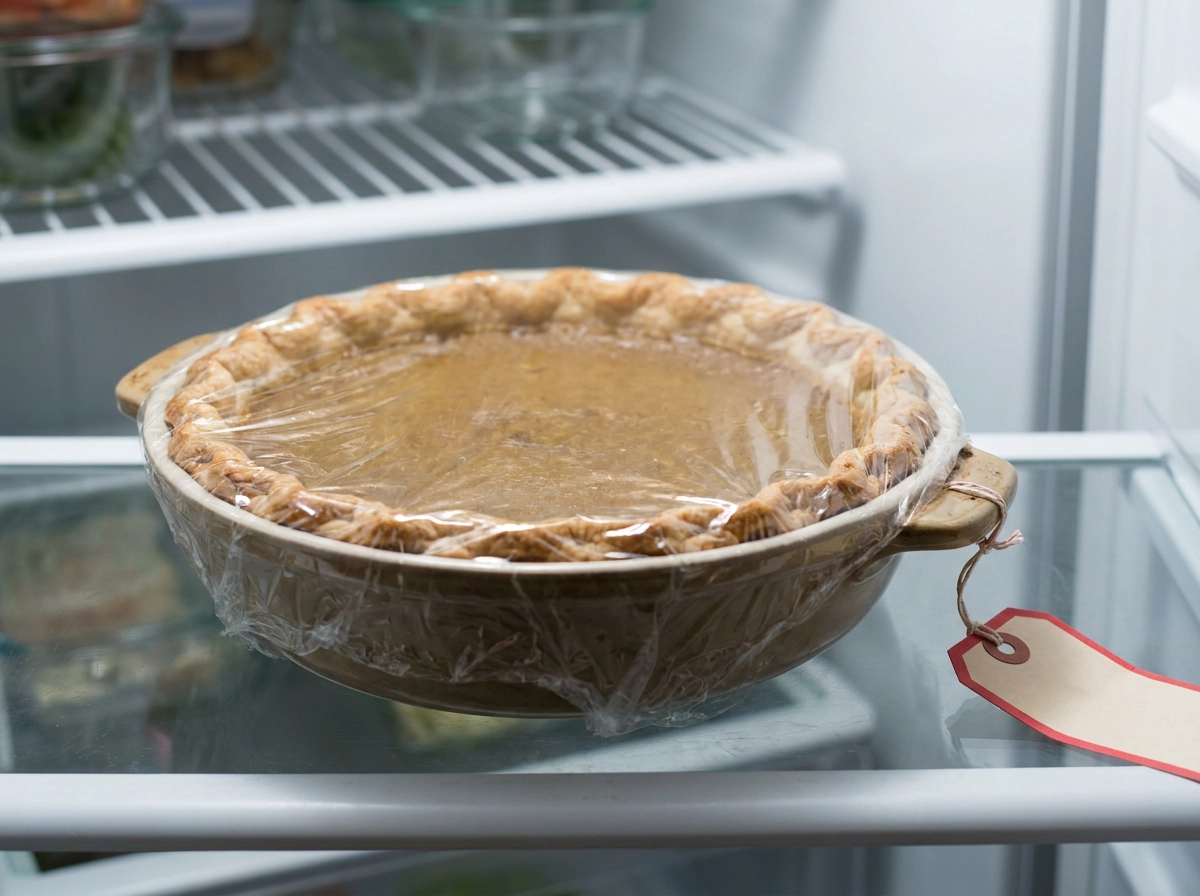
Cream, custard, and dairy-based pies need more care than a fruit pie on a buffet. That includes bean pie and sweet potato pie, whose fillings are dairy or egg based, so they are perishable desserts.
The working rule for most events: keep these pies refrigerated until serving. According to USDA Food Safety and Inspection Service guidance on the danger zone, perishable food should not sit out more than two hours, or one hour when the temperature is above 90 degrees Fahrenheit. Refrigerators should hold at 40 degrees or below. Check the current USDA page before your event, since federal guidance gets updated.
Serve in batches. Set out two pies at a time and refill from the cooler. This keeps dessert safe, creates a natural pause that slows grazing, and stretches your headcount math a little further.
No refrigeration at the hall? Choose a fruit or crumb pie that tolerates room temperature better, pack a cooler with ice packs, or time delivery close to dessert service so pies arrive cold.
Food safety is the one part of pie planning you cannot fudge for the headcount. Budget cooler space in the same document where you write down how many pies to order. Store leftovers cold, and if a pie tastes stale or dry the next day, that is a quality issue, not a safety one.

Ordering, Delivery, and Timing Tips for Large Events
Once you know where the pies will stay cold, lock in the order itself. For events over 50 guests, place your order one to two weeks ahead and confirm the delivery window in writing. Reunions and community events cluster on weekends, so bakery capacity tightens fast and popular flavors sell out first.
Confirm the same three details with the bakery you identified earlier, diameter, slice count, and whole vs. pre-cut, since these appear directly in your final order.
Schedule delivery for one to two hours before dessert service, not the morning of the event. Delivery timing, not the headcount, is what usually wrecks a dessert table.
Ask about packaging, too. Boxed and pre-sliced pies let volunteers plate quickly and spare a guest the mangled wedge nobody can serve. If you’re juggling dietary needs on top of headcount, read about the convenience of ordering gluten-free desserts online while you’re planning.
If the math is more trouble than it’s worth, Bean Pie America can deliver pies to your event. Hand off the headcount, and your dessert table is handled.
Your Pie Math Cheat Sheet
The full method lives in the sections above; here is the summary:
Remember three numbers:
- 20 guests: 3 to 4 pies
- 50 guests: 7 pies
- 100 guests: 13 to 14 pies
Each assumes an eight-slice cut and roughly 90 percent of guests eating dessert, adjust this if your event skews differently.
Confirm rather than assume. One quick call about pan size and slice count replaces every estimate in this guide, and it takes about two minutes.
So write down your guest count, subtract for dessert skippers, divide by eight, add your buffer, and place the order. If you would rather skip the arithmetic for a large event, Bean Pie America can turn your headcount into pies.
Conclusion
The cheat sheet above gives you the numbers, one pie per eight guests, round up, add your buffer.
