
No products in the cart.
Blogs
Dessert Delivery Timing for Birthdays and Late Nights

28
Oct
Oct
You found the perfect pie. You hit order. Then you realize the delivery window is all about you, not the person blowing out the candles. That is how a thoughtful surprise turns into a sad box on the porch. The secret to occasion delivery is timing for the recipient’s moment, not your schedule.
In this guide, we’ll walk through how to get birthday dessert delivery right, plus thank-you pies and late-night cravings. You’ll learn why recipient-first timing decides whether a delivery works, how to anchor an order to their moment, and how to time a birthday order to the candles. We’ll also cover thank-you gestures, late-night orders, 24-hour questions, and practical tips on windows, freshness, and packaging that survives the trip. If the window misses, we’ll show you how to salvage the moment. By the end, you’ll know how to order for their moment, not your convenience, even if you’re a total beginner. Because dessert should arrive when it matters, not just when it’s easy.
Why Recipient-First Timing Decides Whether the Delivery Works
Most occasion dessert deliveries don’t fail because of the pie. They fail because the order was placed on the sender’s schedule instead of the recipient’s. The box shows up before the party starts, or after everyone has gone home.
Dessert is a moment-bound gift. Cake means candles. A thank-you means the favor just ended. A late-night craving means someone is still awake and hungry. A box on the counter at 9 a.m. reads as an errand. That same box at 6:45 p.m. reads as a gesture.
Delivery apps are built around your convenience, not your recipient’s moment. The default checkout flow assumes you want it now, so timing, the most important decision in the order, gets made by accident instead of on purpose.
General delivery habits cluster around moments. DoorDash’s Online Ordering Trends Report, published August 2024 and covering the 2024 year end, found 68 percent of customers ordered delivery the same amount or more than in 2023, and named Saturday at 6 p.m. the most popular ordering time. The survey drew 1,012 respondents through Dynata.
Those figures describe general food delivery, not desserts, and the coverage is Australian trade reporting on US company data. Treat them as context for behavior, not proof about pie. When delivery delays and mishaps happen, they usually trace back to access and timing.
This guide follows one repeatable order: occasion, moment, window, dessert, checkout.
Step 1: Anchor the Order to the Recipient’s Moment
Here is the order of operations that makes recipient-first timing work.
Name the moment. Before opening any app, name the exact moment you want the box to land. Candle-and-song time. The end of a shift. The favor’s end. 11 p.m. on a Friday. Write it down.
Make it a window. Turn that moment into a window, not a timestamp. Estimates are ranges, so a 30 to 60 minute window centered on your target absorbs traffic, weather, and driver routing while protecting the surprise.
Work backward. Work backward through three variables: prep-to-door time, any chill, thaw, or warm-up the dessert needs, and how long it holds at room temperature. If the hold time is short, tighten the window. Regulators use four hours as an outer benchmark for food held without temperature control, but that is a food-service rule, not a home green light. For freshness, see timing your order for freshness.
Check access. Check the recipient’s location realities before you pick a slot: gate codes, apartment buzzers, office reception hours, and whether a human can accept the delivery. A perfect window with nobody at the door still fails.
Decide who is in on it. If the surprise is the dessert, the recipient can know it is coming. If the surprise is the timing, recruit a partner, roommate, or front-desk ally to receive it.
Lock the sequence. Keep that sequence, occasion first, product last, and the timing falls into place.
Birthday Dessert Delivery: Time It to the Candles
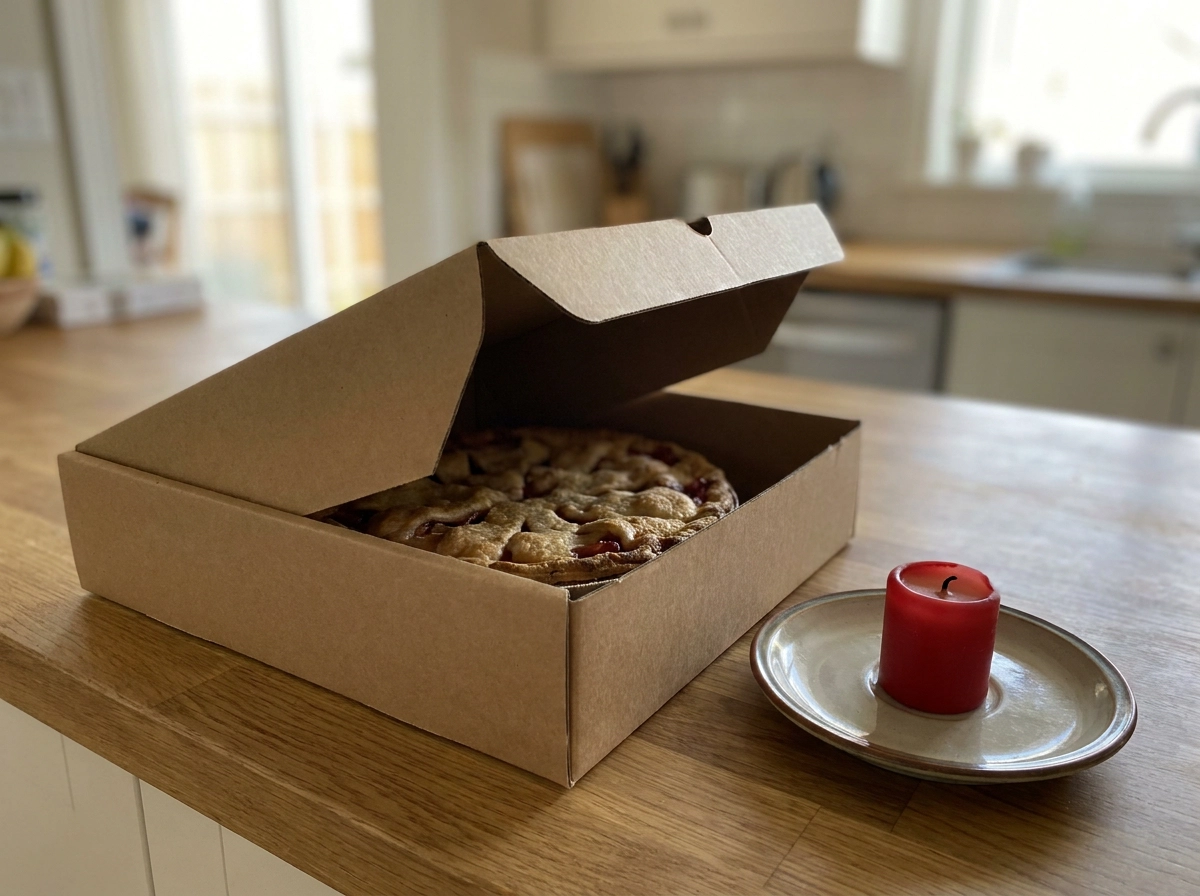
Once the moment is anchored, birthday timing becomes simple subtraction. For a 7 p.m. dinner table, aim the delivery window at 6:30 to 6:45 p.m. so the pie is present, unboxed, and at serving temperature before the plates are cleared.
Office birthdays run on a different clock. A 2 to 3 p.m. team break is when the room is actually together. A 9 a.m. arrival sits in a break room for six hours and quietly stops being a gift.
Home surprises work best when the recipient is home and not mid-task: after work but before they start cooking, or a Saturday late morning. Loop in a partner, roommate, or doorman so nothing is left on a step in the sun.
Choose a dessert that slices cleanly at room temperature with no last-minute plating. A bean pie, made primarily from navy beans with sugar and spices, holds its shape and needs nothing but a knife, which is exactly what you want when the party is in someone else’s kitchen. Bean pies are versatile for just about any occasion, which keeps the guest list simple.
If the birthday falls on a Tuesday but the party is Saturday, make the call deliberately. On the real day, it’s a small personal gesture; on party day, it’s the shared moment. Either works, as long as the note says why.
Use that note for timing, not just greeting. One line about why the pie landed today turns a delivery into a decision somebody made on purpose.
Thank-You Dessert Delivery: A Gesture Timed to Land Well
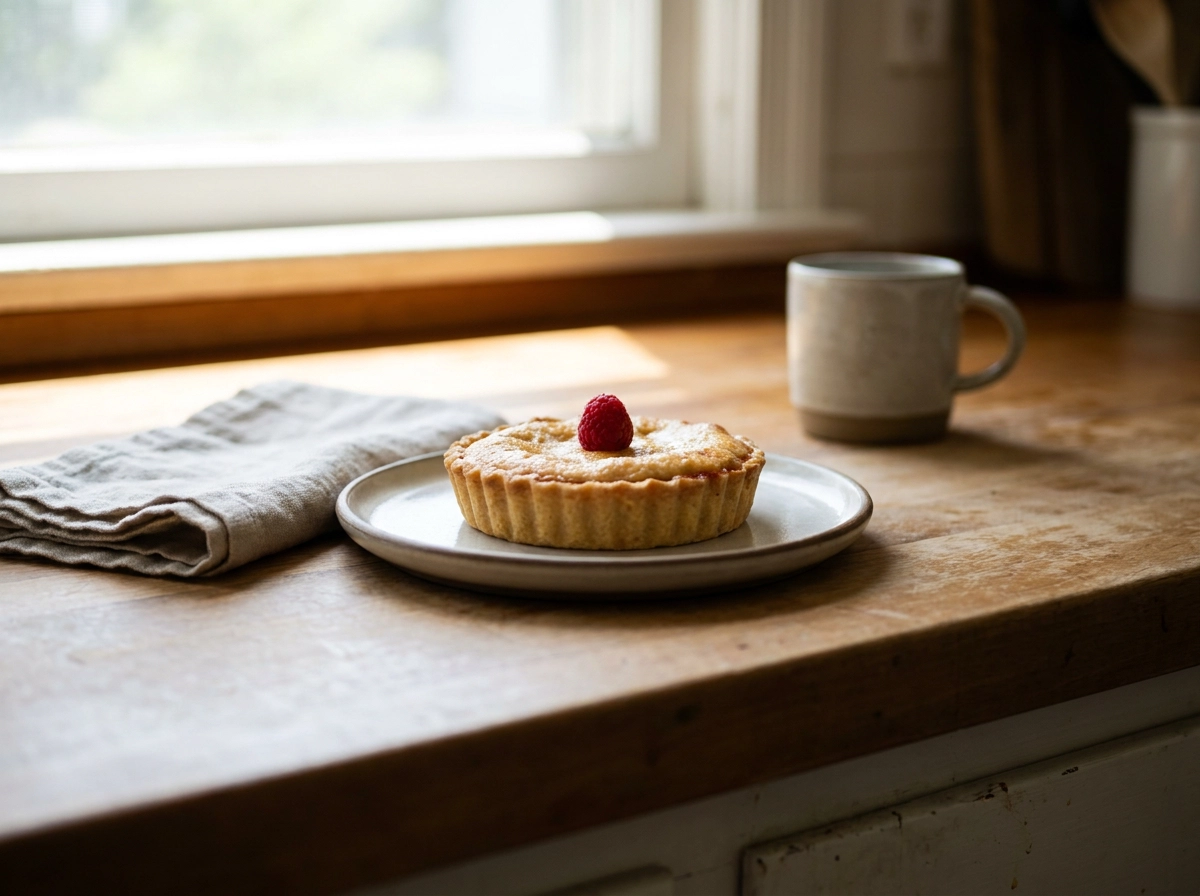
Birthdays run on the clock. Thank-yous run on proximity. The thing you are honoring is the effort, not a date on the calendar, so the closer to the moment, the better; aim to deliver while the effort is still fresh in both of your minds. A week later, the same pie reads as an afterthought.
Then time the window to the exhale. A box arriving while someone is still hauling boxes down three flights of stairs is one more task, not relief. Send it after the work is finished.
Business thank-yous live or die on reception hours. Deliver during business hours to a staffed front desk, and confirm ahead that a person can accept it. A weekend drop at a closed office is the most common way a thank-you never lands.
When the ideal day is out of reach, split the gesture. Send the message today and schedule the delivery for the next workable window. The note carries the timing and the pie carries the weight. That matters more than most senders assume: people consistently underestimate how much a thank-you means to its recipient.
Pick a dessert with a story worth one sentence. Bean pies come out of the African American Muslim community, and many recipients enjoy learning where the tradition comes from, so two lines about the heritage do more than a card. Scheduling the order online makes locking in that window simple.
Keep the message short and specific: what you are thanking them for, and nothing about your own scheduling trouble unless the delivery is genuinely late.
Late Night Dessert Delivery: Cravings, Shift Ends, and the 24 Hour Question
Thank-yous land on somebody else’s timeline; late nights are the one occasion where the recipient’s clock is the whole point.
Late-night ordering is growing, at least in general food delivery. DoorDash’s 2024 report, covered in August 2024, found midnight-to-5 a.m. orders up 107 percent and 5-to-11 a.m. orders up 58 percent. Those are dated, all-food numbers from Australian trade coverage, not dessert data.
Who is awake matters too. In that same 2024 report, 79 percent of Gen Z and 74 percent of Millennials said they were more likely to place late-minute orders, versus 38 percent of Baby Boomers. A midnight bean pie delights the first two groups and confuses the third.
Most 24 hour dessert delivery searches are not really about 3 a.m. They are about reassurance: can this arrive when the shift, show, or celebration actually ends? That is scheduling, not impulse.
Plan around real moments: a nursing shift ending at 11 p.m., a closing night, a newborn’s first weeks, a study group before finals, a birthday that only starts after dinner service.
Apply the same guardrails: confirm access, choose a scheduled window, and order earlier rather than at 1 a.m. The Convenience of Ordering Pies Online makes that easy. Research does not prove any specific 24-hour dessert service exists; it only shows later ordering in general. Next, windows, freshness, and packaging.
Timing Tips: Windows, Freshness, and Packaging That Survives the Trip
Whether it’s a candlelit birthday or a midnight shift end, these timing moves make the delivery land.
- Buffer first. For a fixed date and hour, order a day ahead and request a scheduled window. That is the biggest reliability upgrade a beginner can buy.
- Match the pie to the trip. Bean and sweet potato pies travel well. Crumb-topped pies are fragile, so hand-deliver them or keep the trip short.
- Check hold time. Ask how long it holds and whether it needs refrigeration. Keep it at 40°F or below if so. Never let delivery eat the serving window. If hold time is two hours and the party is at four, move the slot or send something else.
- Make the box presentable. If the recipient may open it on the spot, the packaging has to arrive intact and look intentional. Confirm what the box says on the outside and what happens if nobody answers.
- Consider health watchers. Bean Pie America swaps cream for plant-based ingredients to reduce cholesterol and saturated fats, so guests who usually pass can say yes.
- Confirm the door. Who is knocking, what the box says, and what happens if nobody answers? Settle those before checkout.
When the Window Misses: How to Salvage the Moment
Even with a buffer built in, deliveries slip. What separates a saved moment from a spoiled one is how quickly you adjust.
It shows up early. Early is the easy fix. Refrigerate the pie if it needs it, then bring it back to room temperature before serving. After that, reframe it: the dessert is already there, and the celebration has not started yet. That is a bonus round, not a misfire.
It runs late. Send a heads-up before the estimate lapses. Two lines do the job: “Something is on the way, hold off on dessert.” The gesture survives a slow clock as long as the recipient knows it is coming.
The driver cannot get in. Most timing failures are not kitchen problems. They are a wrong gate code, a missed buzzer, or an unstaffed front desk.
Then write it down. After the delivery, note the real arrival time, how long the pie held up, and its condition at the door. That record becomes your delivery profile for the next occasion.
Adjust for next time. Widen the window by 15 minutes and schedule earlier in the day. A repeat sender who learns real transit time lands the moment far more often than one who keeps guessing.
Order for Their Moment, Not Your Convenience
Salvaging a missed window is your safety net. Planning so you never need it is the skill. Run every order through the same short sequence, no matter the occasion.
- Name their moment before you open the menu, the same first move from Step 1.
- Convert that moment to a 30–60 minute window and work backward through transit, hold time, and access, as in Step 1.
- Choose a dessert that travels and serves without fuss. Bean pies hold their shape, slice cleanly, and swap cream for plant-based ingredients, so the gesture is easy to accept.
- Order ahead: a day out for birthdays, earlier in the evening for late-night windows.
- Finish with a note that names the occasion. “Happy 30th, save me a slice,” or “Thank you for Saturday.” The dessert is the message. The timing is the punctuation.
Occasion delivery works when the recipient’s clock sets the schedule. Ready to send one? Pick the moment, then pick the pie.
Conclusion
Every occasion in this guide runs on the same logic: their moment, not your schedule. Set the window, write the note, and send the pie into their day.
The payoff is simple. You stop guessing, and they get the gesture when it means the most. So before you browse another menu, write down their moment. Then set the window, pick the pie, and send it into their day. Your next delivery can land exactly right.
